Volunteer Vet: How to Get Involved at Clinics, Shelters, and Animal Hospitals
A volunteer vet role gives veterinary students, pre-vet undergraduates, and animal lovers a structured way to gain clinical exposure while contributing to community animal health. A volunteer vet clinic typically offers low-cost or free veterinary services to underserved pet owners, and it depends on trained volunteers to extend its capacity. A veterinary volunteer at a shelter or rescue organization supports animal care that would otherwise be beyond the organization’s staffing budget. An animal hospital volunteer in a teaching hospital setting may assist with animal handling, post-operative monitoring, and client communication. A volunteer animal clinic run by a university or nonprofit gives volunteers real exposure to diagnostic and treatment workflows under licensed supervision.
Each of these settings has different expectations, time commitments, and learning opportunities.
Finding the Right Volunteer Vet Placement
A volunteer vet clinic connected to a veterinary school often has the most structured training program. These settings offer scheduled orientation, supervision by licensed veterinarians, and clear protocols for what volunteers can and cannot do independently. A veterinary volunteer at a humane society or SPCA may have more autonomy but less formal clinical exposure; the role often emphasizes animal socialization, exercise, and basic care rather than medical procedures.
An animal hospital volunteer placement at a private practice is less common but does exist, particularly in rural areas with high demand and limited staff. A volunteer animal clinic that operates through mobile units needs volunteers who are comfortable in dynamic, outdoor environments with limited equipment.
What Volunteer Vet Work Involves Day-to-Day
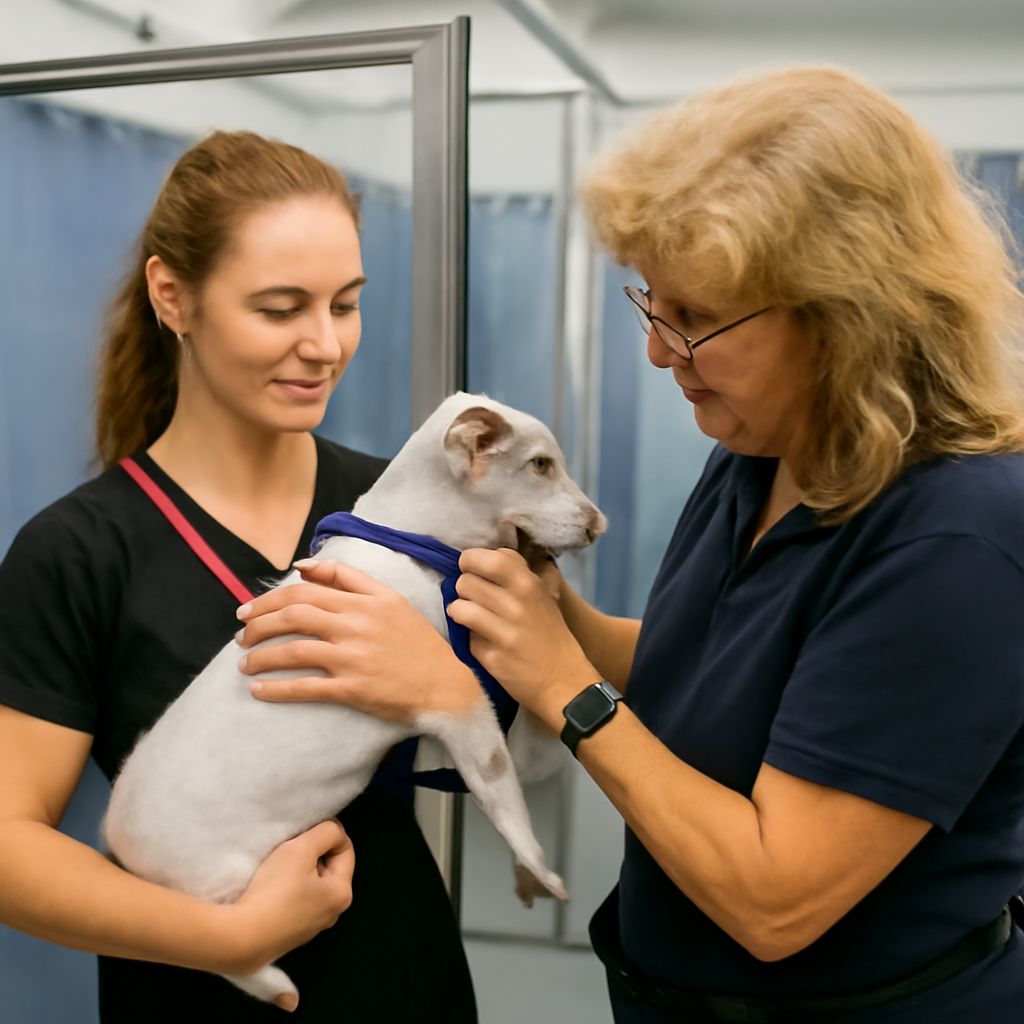
A volunteer vet clinic shift might include: restocking exam rooms, restraining animals for examination, cleaning kennels, assisting with client intake, and supporting post-operative recovery monitoring under clinician oversight. A veterinary volunteer at a shelter handles feeding, cleaning, behavioral observation, and socialization of animals awaiting adoption.
An animal hospital volunteer in a teaching setting may observe surgeries, assist with inventory management, and help with record-keeping. Always follow the facility’s protocol for handling animals. Even friendly animals can bite or scratch when stressed; proper restraint technique protects both the animal and the volunteer. A volunteer animal clinic supervisor will train you on these skills before your first solo shift.
Making Your Volunteer Vet Experience Count
Document every volunteer vet hour and request written references from supervising clinicians after three months. Pre-vet students who accumulate 200 or more hours across a volunteer vet clinic, shelter, and private practice setting demonstrate diverse exposure that admissions committees value. A veterinary volunteer who takes on additional responsibilities, like helping train new volunteers, shows leadership that distinguishes strong applications.
An animal hospital volunteer who asks questions and follows up on learning demonstrates engagement that supervisors remember when professional opportunities arise.
Bottom line: Volunteer vet work builds the clinical experience and professional relationships that formal education cannot fully replace. Start with one volunteer animal clinic or animal hospital volunteer role, commit consistently, and build from there.