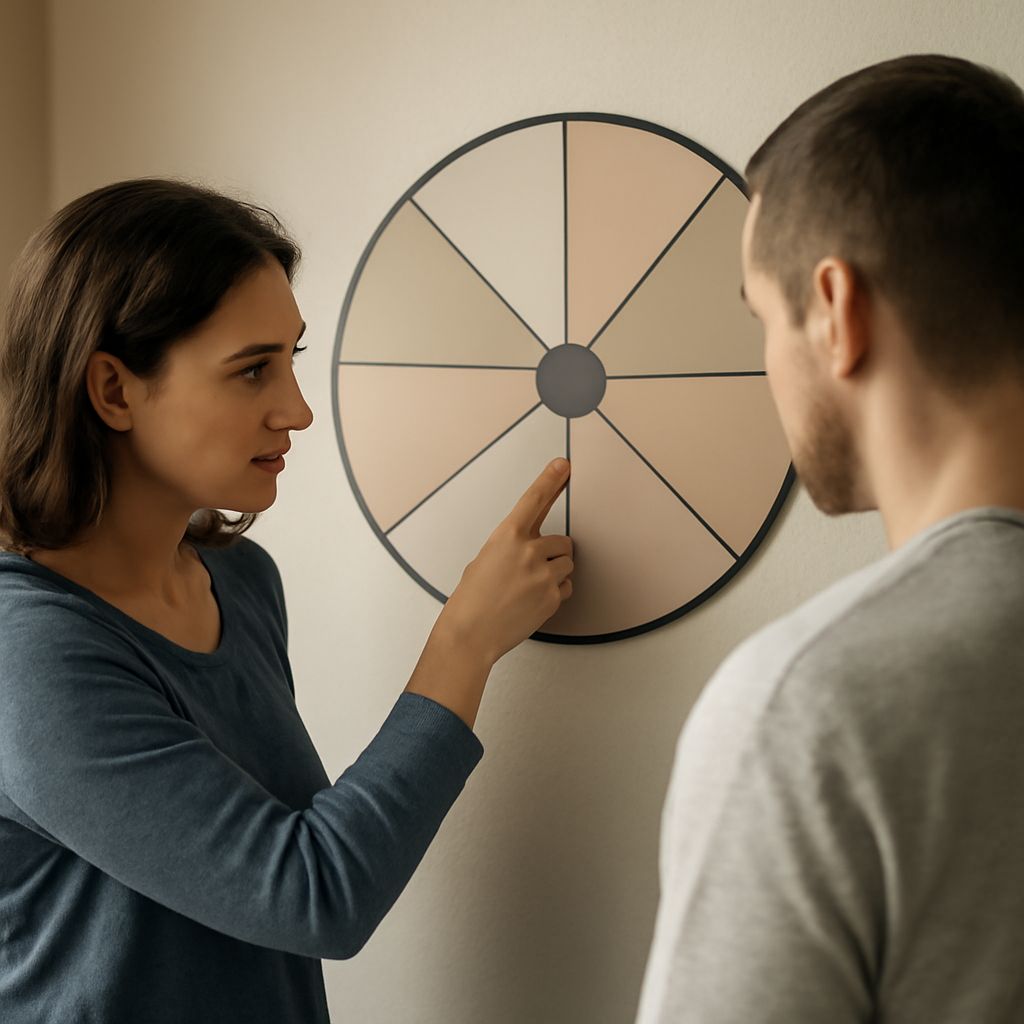
Cycle of Violence Wheel: Phases, Diagrams, and Stages of Domestic Violence
The cycle of violence wheel is one of the most widely used tools for understanding abusive relationship dynamics. Originally developed by Lenore Walker in the 1970s, it describes how abuse escalates and resets in predictable patterns. A cycle of abuse diagram typically illustrates four phases: tension building, incident, reconciliation, and calm. Stages of domestic violence within this cycle help survivors and counselors identify where they are in the pattern. The cycle of violence phases repeat with increasing severity over time. A cycle of violence diagram makes this visual — showing how what feels like relief or resolution is often just a temporary reset before the next escalation.
We address this framework because naming these stages is often the first step toward leaving.
The Four Cycle of Violence Phases
Cycle of violence phases follow a recognizable sequence. First, the tension-building phase: small incidents accumulate, the victim walks on eggshells, and the abuser’s anger grows. Second, the acute explosion: violence or severe emotional abuse erupts. Third, reconciliation (the “honeymoon” phase): the abuser apologizes, makes promises, and may be affectionate. Fourth, the calm phase: the incident seems forgotten; life appears normal.
The cycle of violence wheel shows these phases as a continuous loop rather than a linear progression. Each pass through the cycle of violence phases often sees the tension phase shorten and the explosion become more severe. Victims frequently stay during the honeymoon and calm phases, which the cycle of abuse diagram makes easier to understand from the outside.
How a Cycle of Abuse Diagram Is Used in Counseling
Therapists and advocates use a cycle of abuse diagram to help survivors identify their own experience within the pattern. Many victims feel confused about whether what is happening to them qualifies as abuse. Seeing the stages of domestic violence mapped visually confirms that what they are experiencing has a name and a predictable structure. The cycle of violence diagram also helps explain why they did not leave earlier: the calm and reconciliation phases are real and produce genuine hope that change is possible.
Stages of Domestic Violence Over Time
Stages of domestic violence in long-term relationships show escalation. Early in a relationship, the cycle of violence wheel may turn slowly — with long calm phases and mild incidents. Over years, the cycle of violence phases accelerate. Incidents become more dangerous. The honeymoon phase grows shorter. The cycle of violence diagram in these later stages looks very different from its starting point.
This escalation pattern is why early intervention matters. Cycle of abuse diagram education in schools and workplaces reaches people before the pattern is fully established.
Using the Cycle of Violence Wheel for Safety Planning
Understanding the cycle of violence wheel helps survivors time safety planning around the calm phase — when access to resources is easiest and the abuser’s vigilance is lowest. The stages of domestic violence provide a framework for conversations with advocates at the National Domestic Violence Hotline (1-800-799-7233).
Safety planning should happen before the tension-building phase intensifies, not during or after the acute explosion. A cycle of violence diagram shared with trusted friends or family members helps them understand why leaving is complicated and when their support is most needed.
Key takeaways: The cycle of violence wheel explains how abuse operates in predictable, repeating stages. The cycle of abuse diagram makes the pattern visible in ways that help survivors recognize their experience. Understanding the stages of domestic violence and cycle of violence phases is not a prescription to stay — it is a tool for making informed, safer decisions about leaving.