Narcissist Abuse: What Is Narcissistic Abuse and How It Affects Relationships
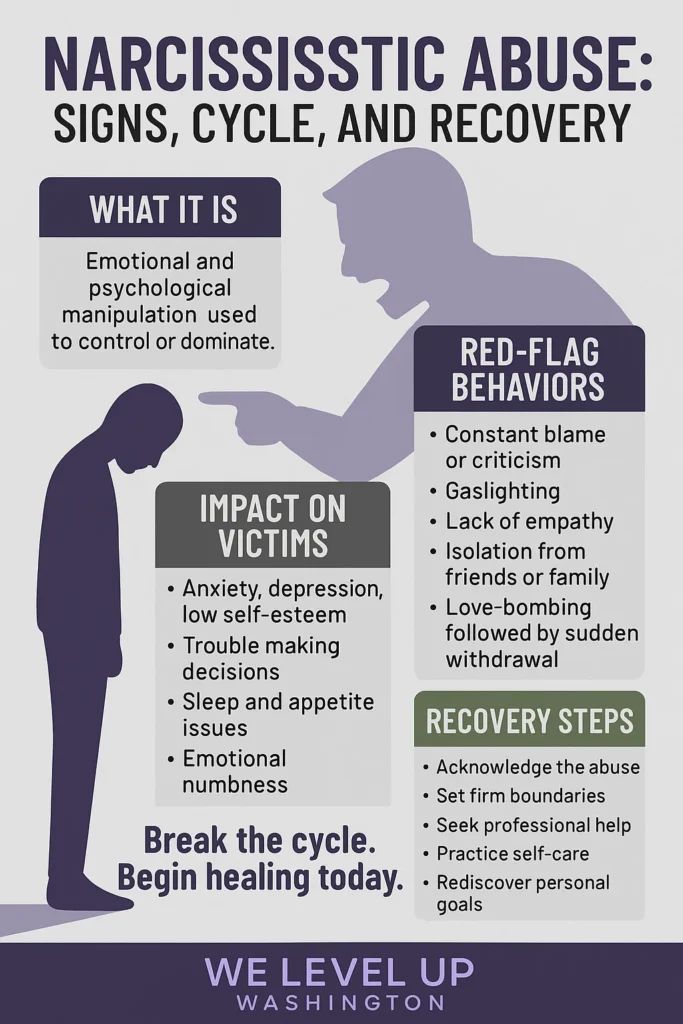
Understanding narcissist abuse is one of the most important steps a survivor can take toward healing. What is narcissistic abuse? It is a pattern of manipulative, controlling behavior carried out by someone with Narcissistic Personality Disorder (NPD) or significant narcissistic traits — designed to maintain power over a partner while destroying their confidence and sense of reality.
We explain npd abuse dynamics in detail, describe what narcissistic abuse in relationships typically looks like over time, and clarify the progression of a narcissistic abuse relationship so survivors can recognize where they are in the pattern.
Understanding NPD Abuse Dynamics
Narcissist abuse operates through a predictable but insidious set of mechanisms. The relationship typically begins with idealization — the narcissist floods the target with attention, affection, and apparent understanding. This “love bombing” phase creates rapid bonding and dependency before devaluation begins.
NPD abuse in the devaluation phase includes gaslighting (causing the victim to doubt their perceptions), intermittent reinforcement (alternating between affection and cruelty to maintain psychological uncertainty), triangulation (introducing third parties to provoke jealousy and insecurity), and gradually escalating criticism and control. What is narcissistic abuse if not a systematic dismantling of the target’s autonomy and self-trust?
The Discard and Hoovering Cycle
Most narcissistic abuse relationships follow a cycle that includes periodic “discard” phases — abrupt emotional withdrawal or abandonment — followed by “hoovering” (attempting to suck the target back in with renewed affection). This cycle can repeat many times before a final rupture. Understanding the cycle helps survivors recognize that re-idealization phases are not evidence that the abuse has ended.
Narcissistic Abuse in Relationships: Long-Term Effects
Narcissistic abuse in relationships produces specific psychological effects that distinguish it from other forms of relationship conflict. Survivors commonly experience complex PTSD, hypervigilance about their partner’s moods, chronic shame, dissociation, and profound difficulty trusting their own perceptions — a direct result of sustained gaslighting.
Narcissist abuse survivors often describe a “FOG” state (Fear, Obligation, Guilt) that keeps them in the relationship long after they recognize the harm. The FOG is deliberately cultivated through NPD abuse tactics that simultaneously create emotional dependency and shame around the idea of leaving.
The Narcissistic Abuse Relationship in Context
A narcissistic abuse relationship does not always involve physical violence. Many survivors are dismissed when they describe their experience because there are no bruises. But neurological and psychological research confirms that sustained psychological harm causes measurable trauma responses. The harm is real, even when invisible.
Recovery: Leaving and Healing
Recovery from narcissist abuse requires both physical safety and psychological reconstruction. Trauma-focused therapy — particularly EMDR and Cognitive Processing Therapy — addresses the specific neurological effects of sustained psychological abuse. Many survivors also find peer support groups invaluable because connecting with others who understand narcissistic abuse in relationships reduces isolation and validates experience.
No Contact or Limited Contact strategies are widely recommended for survivors of a narcissistic abuse relationship, because continued contact with the abuser interrupts the nervous system’s ability to regulate and process trauma. Key takeaways: Understanding what is narcissistic abuse — and recognizing npd abuse patterns in your own relationship — is the foundation of recovery. Professional support dramatically accelerates healing.