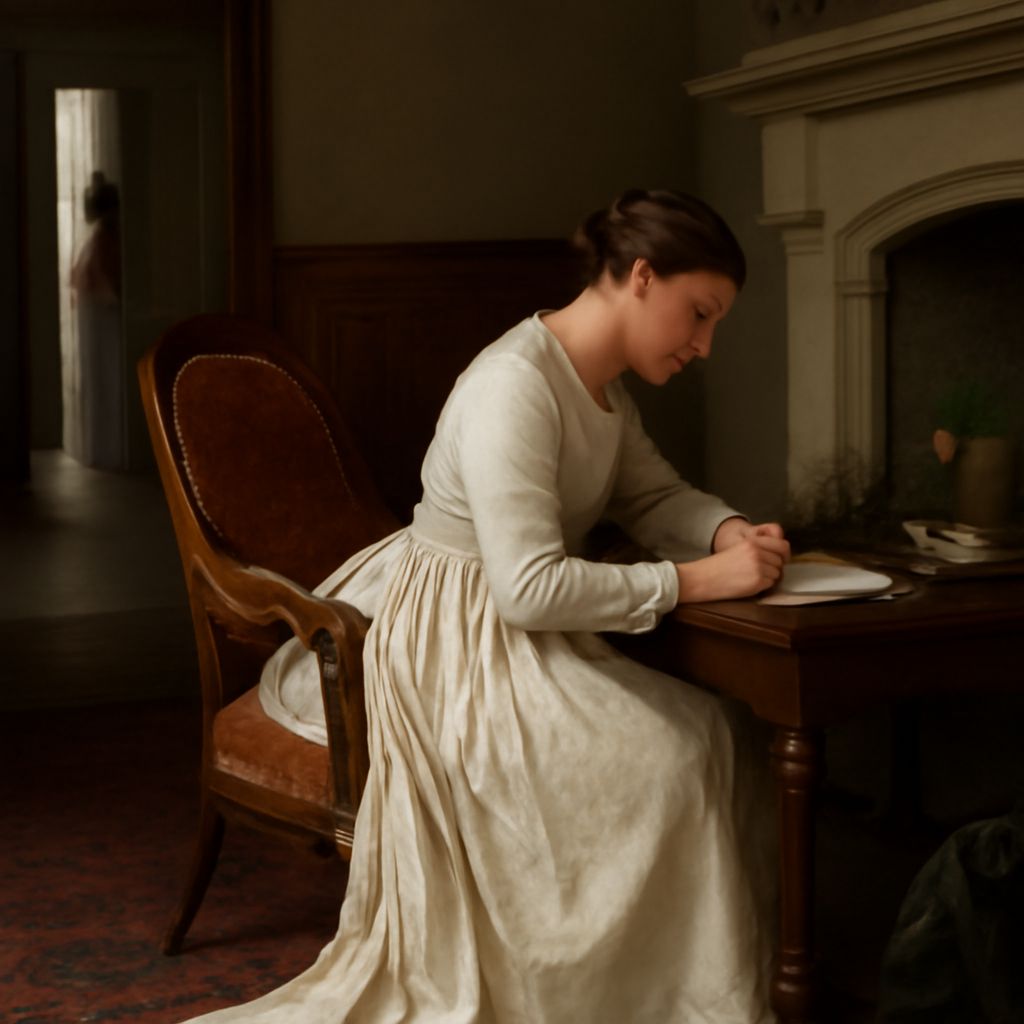
In Victorian Britain, expectations for men and women often assigned men authority and paid work and women responsibility for home and family. Those expectations did not describe everyone’s life. Class, money, marital status, and access to education shaped what people could do and how much choice they had.
The Victorian era takes its name from Queen Victoria’s reign, from 1837 to 1901. During those decades, people argued over family, employment, education, and political rights. The rules and customs described here concern Britain; experiences and laws elsewhere differed.
Victorian gender roles and the ideal household
A common middle-class ideal divided life into “separate spheres”: men were associated with earning, politics, and public authority, while women were expected to create a moral, orderly home. A respectable wife was often presented as a caregiver and a source of calm for her family. Victorian gender roles also placed pressure on men to provide an income and exercise authority in the household.
Victorian era gender roles were therefore both a set of ideals and a way of distributing power. An ideal could influence a family’s reputation even when that family could not afford to live by it. It also obscured the work that made a comfortable home possible, including the labor of servants and the unpaid organizing, cleaning, and care performed by family members.
The ideal was never a complete picture of gender roles in the Victorian era. Some women managed businesses, supported reform campaigns, or worked for wages. Men could be involved in caring for children or depend on income earned by other family members. What was considered proper could differ from what a household needed to survive.
Work depended on money and circumstances
A well-off family might employ a cook, maid, or governess, while the woman of the household supervised domestic arrangements. The employee’s workplace was someone else’s home, and her hours and privacy depended in part on her employer. A middle-class family without substantial income could still value the ideal of a wife at home, but the ability to maintain it varied.
For many working-class households, women’s earnings were necessary. Women worked in factories, laundries, workshops, and domestic service, and some took paid work into their own homes. In a debate recorded by Parliament in 1844, a speaker cited reports of young women working very long factory days. The account is evidence of conditions and debate, though it should not be treated as a schedule for every worker.
Paid work did not make domestic responsibilities disappear. A woman might return from a shift to prepare food, wash clothes, and care for children. A widow or an unmarried woman could face particular pressure to secure income, while a married woman’s access to wages and support depended on her circumstances. Even within the same town, a factory worker, a servant living with an employer, and a shopkeeper’s wife could have very different days.
Lawmakers debated factory hours partly in terms of women’s domestic duties. The 1847 Factory Act limited hours for women and young people in covered factories. Such rules could reduce excessive hours, while also reflecting assumptions about women’s place; their effect depended on the workplace and enforcement.
Marriage and control over property
Under the legal principle known as coverture, marriage restricted a wife’s independent legal identity and control over property. In broad terms, a husband gained rights over property and earnings that a wife brought to or acquired during marriage. Wealthy families sometimes arranged trusts to protect property, an option that depended on access to resources and legal arrangements.
Campaigners challenged these restrictions. According to UK Parliament, the Married Women’s Property Act of 1870 allowed a married woman to keep money she earned as her own property. Further legislation in 1882 extended married women’s control over their property. These changes mattered, although having a legal right and having money or the means to exercise that right were different things.
Marriage could also shape a person’s ability to leave an unhappy or abusive relationship. Financial dependence, concern for children, social pressure, and the legal options available at a particular time could all affect decisions. There was no single experience of marriage, and a formal household ideal tells little about how safe or supportive an individual home was.
Education and challenges to limits
Educational opportunities expanded during the period, but access depended on income, location, and the institution. A family able to pay for instruction could offer a daughter choices that were out of reach for a child who needed to earn money. Expectations about suitable subjects and occupations also influenced what education was considered worthwhile.
Campaigners created opportunities as well as seeking admission to existing institutions. The college that became Girton opened for women in 1869. Its own history records both the college’s ambitions and Cambridge University’s rejection of a proposal to grant women degrees in 1897. Women did not receive Cambridge degrees until 1948, after the Victorian period. Studying and succeeding in examinations did not immediately bring equal recognition.
Women also organized for changes in property law and political representation. They petitioned, formed associations, published arguments, and worked with allies. Their aims and strategies were not identical, and opposition to change came from women as well as men. These efforts show that such expectations were contested during the period itself.
Did these restrictions end when Victoria’s reign ended? No. Some laws and opportunities had changed by 1901, while campaigns for fuller political and educational equality continued into the twentieth century.