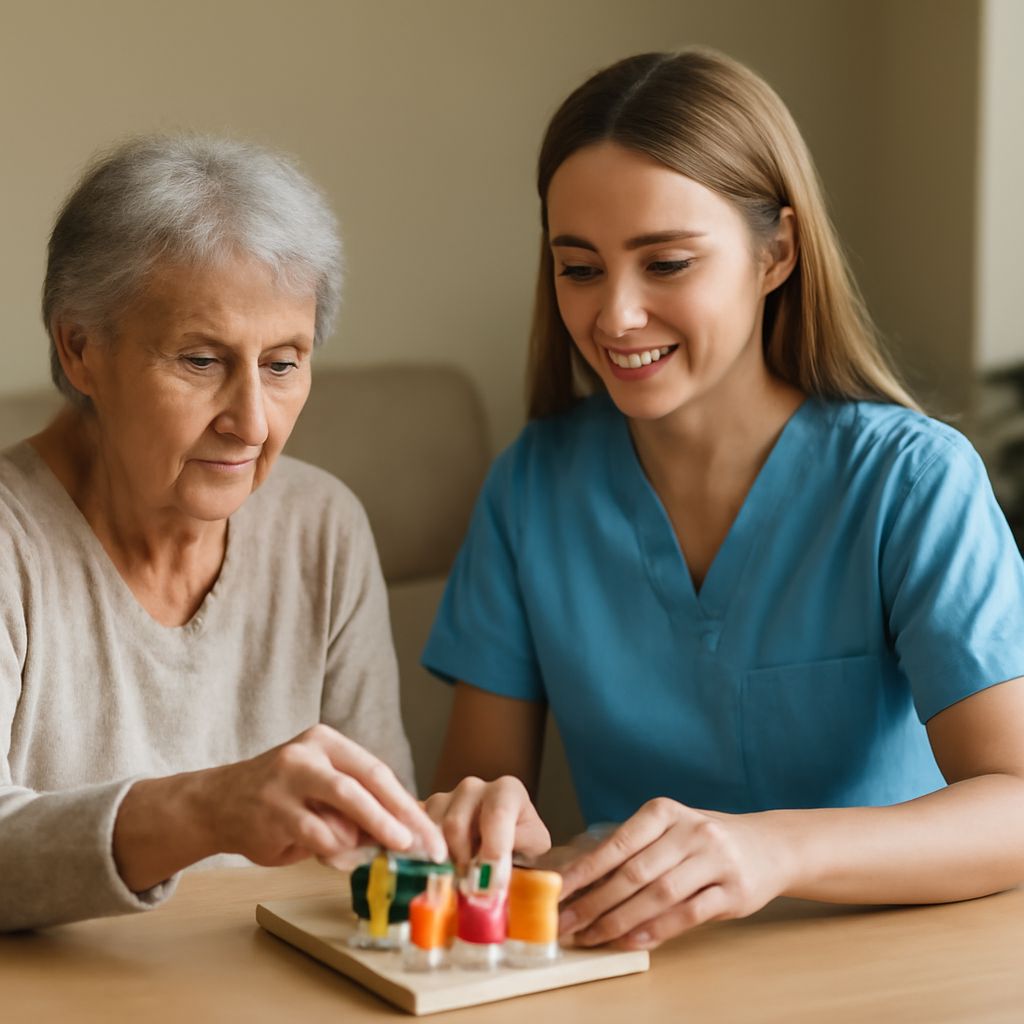
Becoming an occupational therapy volunteer gives aspiring clinicians and community members alike a direct way to contribute to patient rehabilitation while building practical knowledge. Occupational therapy volunteer opportunities exist in hospitals, rehabilitation centers, community health organizations, and schools. Beyond OT, a phlebotomy volunteer role offers another entry point into healthcare settings, and a volunteer phlebotomist can support blood collection services at free clinics and mobile health units. Volunteer occupational therapy programs also connect retired professionals with patients who benefit from their expertise.
We see growing demand for both occupational therapy volunteer and phlebotomy positions as healthcare systems seek to extend services without proportional staffing increases. The value flows in both directions: volunteers gain hands-on exposure and professional references, while organizations gain capacity.
Finding and Applying for Occupational Therapy Volunteer Opportunities
Occupational therapy volunteer opportunities are listed through hospital volunteer coordinators, university OT programs, and organizations like the American Occupational Therapy Association. When applying, highlight any coursework, caregiving experience, or prior healthcare work. Volunteer occupational therapy roles vary from direct patient interaction to activity facilitation and administrative support; knowing which type fits your background helps you apply effectively.
For phlebotomy volunteer positions, certification is often required. A volunteer phlebotomist at a community clinic typically needs at least a certified phlebotomy technician credential. Some programs offer training as part of the volunteer pipeline, so ask explicitly whether that option is available when you reach out.
What Volunteers Do Day-to-Day
An occupational therapy volunteer working in a rehabilitation setting might help patients practice fine motor tasks, assist therapists in setting up equipment, or document session observations. Volunteer occupational therapy in pediatric settings often involves facilitating play-based activities under therapist supervision.
A phlebotomy volunteer at a community health fair handles patient intake, performs blood draws, and processes specimens under clinical oversight. A volunteer phlebotomist must follow strict infection control protocols; proper glove use, sharps disposal, and patient communication are non-negotiable. These safety practices protect both the volunteer and the patient, and they should be reviewed before every session.
Making the Most of Your Volunteer Experience
Track every occupational therapy volunteer hour and ask for written evaluations from supervising clinicians. These records matter for graduate school applications and job searches. Occupational therapy volunteer opportunities that include documentation responsibilities give you the most transferable skills. The same applies to phlebotomy volunteer work: ask to observe complex draws, learn about quality control, and request feedback on your technique.
A volunteer phlebotomist who takes initiative will be remembered when paid positions open up in the same organization.
Bottom line: Occupational therapy volunteer and phlebotomy volunteer roles offer real clinical exposure that classroom training alone cannot provide. Approach every shift with the same professionalism you would bring to a paid role, and document your hours and accomplishments carefully for future reference.